Description
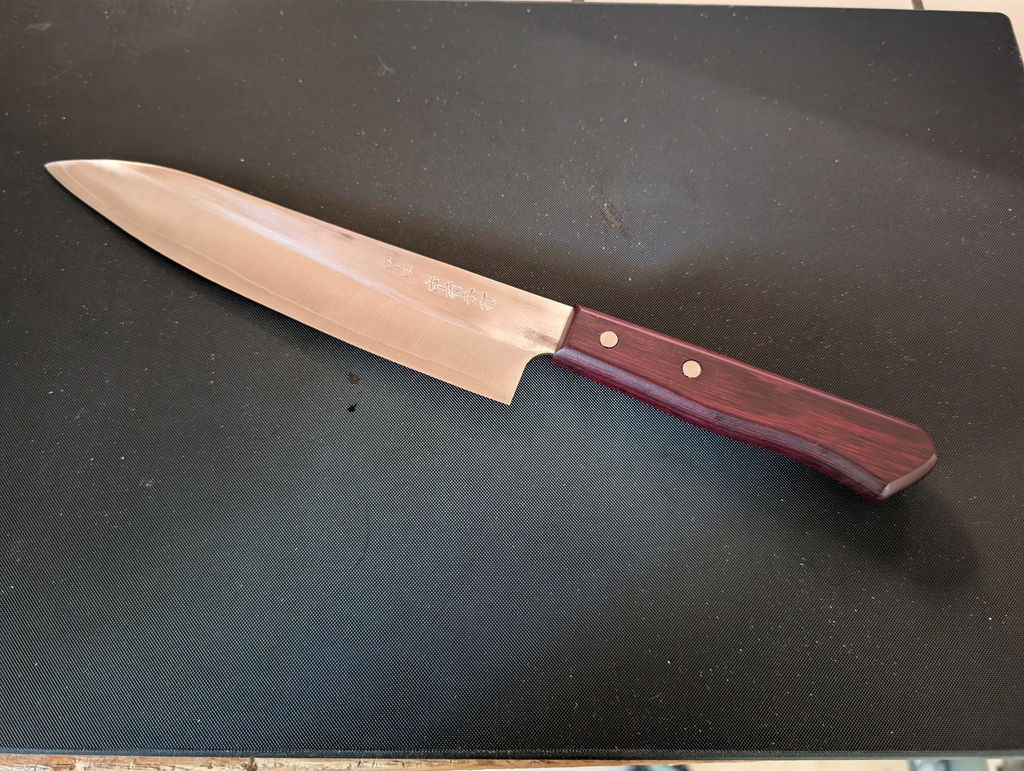
The Nakamura Blacksmith HAP40 Gyuto Knife 200mm is a hand-forged Japanese kitchen knife crafted by Toshio Nakamura, a master blacksmith who has been crafting traditional Japanese knives for close to 70 years at Nakamura Blacksmith. This handcrafted double-bevel knife features a 2-layer construction: a HAP40 High Speed Steel core, known for its exceptional hardness, abrasion resistance and excellent long-lasting edge retention, and a clad in SUS405 stainless steel for added durability.
The knife features a Western style ebony wood handle, and the blade is finished with a mirror polish.
About the Blade Shape: Often described as the Japanese version of the Western-style chef's knife, double-edged gyuto knives are designed for a wide range of kitchen tasks with a slight emphasis on protein preparation. The balanced blade shape supports slicing, chopping, and push cuts with ease, making it ideal for both professional and home cooks. This 200mm gyuto offers adaptability, precision, and everyday reliability.
| Blade Shape | Gyuto | Handle Length | 120mm |
| Blade Material | HAP40 / SUS405 (2-layer) | Handle Material | Ebony Wood |
| Blade HRC | 63-65 | Handle Shape | Western style |
| Blade Finish | Mirror Polish | Total Length | 330mm |
| Blade Length | 200mm | Weight | 160g |
| Spine Thickness at Heel | 2.3mm | Usage | Meat and Vegetables |
| Edge | Double-edge (50/50) | Origin | Miyazaki, Japan |
| Handedness | Right hand, Left-hand |
Nakamura Blacksmith HAP40 Gyuto Knife 200mm

Made in Japan
The Nakamura Blacksmith HAP40 Gyuto Knife 200mm is a hand-forged Japanese kitchen knife crafted by Toshio Nakamura, a master blacksmith who has been crafting traditional Japanese knives for close to 70 years at Nakamura Blacksmith. This handcrafted double-bevel knife features a 2-layer construction: a HAP40 High Speed Steel core, known for its exceptional hardness, abrasion resistance and excellent long-lasting edge retention, and a clad in SUS405 stainless steel for added durability.
The knife features a Western style ebony wood handle, and the blade is finished with a mirror polish.
About the Blade Shape: Often described as the Japanese version of the Western-style chef's knife, double-edged gyuto knives are designed for a wide range of kitchen tasks with a slight emphasis on protein preparation. The balanced blade shape supports slicing, chopping, and push cuts with ease, making it ideal for both professional and home cooks. This 200mm gyuto offers adaptability, precision, and everyday reliability.
| Blade Shape | Gyuto | Handle Length | 120mm |
| Blade Material | HAP40 / SUS405 (2-layer) | Handle Material | Ebony Wood |
| Blade HRC | 63-65 | Handle Shape | Western style |
| Blade Finish | Mirror Polish | Total Length | 330mm |
| Blade Length | 200mm | Weight | 160g |
| Spine Thickness at Heel | 2.3mm | Usage | Meat and Vegetables |
| Edge | Double-edge (50/50) | Origin | Miyazaki, Japan |
| Handedness | Right hand, Left-hand |
Specifications
| Blade Shape | Gyuto | Handle Length | 120mm |
| Blade Material | HAP40 / SUS405 (2-layer) | Handle Material | Ebony Wood |
| Blade HRC | 63-65 | Handle Shape | Western style |
| Blade Finish | Mirror Polish | Total Length | 330mm |
| Blade Length | 200mm | Weight | 160g |
| Spine Thickness at Heel | 2.3mm | Usage | Meat and Vegetables |
| Edge | Double-edge (50/50) | Origin | Miyazaki, Japan |
| Handedness | Right hand, Left-hand |
Product Care Instructions
Shipping + Return Policy
Shipping Policy
All products are crafted, inspected, and shipped directly from Japan.
Please allow up to 5 business days for order processing before dispatch.
Click here for more info on our shipping policy.
Return Policy
We have a 30-day return policy, which means you have 30 days after receiving your item to request a return.
Please note: Made-to-order items, such as Bizen Osafune Swordsmith and Shirou Kunimitsu Tamahagane knives, as well as custom-engraved knives are non-refundable. All sales are final.
Customs Fees & Other Taxes
Import duties, VAT, or local customs taxes may apply once your order reaches your country.
These are set by your local customs authority and are not included in our product prices or free shipping. We suggest contacting the responsible institutions to find more information.
These fees are the customer's responsibility and thus must be paid upon delivery.
FOR U.S. CUSTOMERS: As of May 8, 2026, all U.S. orders are shipped DDP (Delivered Duties Paid). Customs duties and import taxes are included for US customers in the final price shown at checkout.