


Yamawaki Hamono Kurouchi Santoku Knife 180mm
Yamawaki Hamono Kurouchi Santoku Knife 180mm is a handcrafted Japanese Santoku knife forged in Sakai, Osaka by the skilled artisans at Yamawaki Hamono. Made from Aogami No.2 steel, each blade is forged, sharpened, and finished by hand, offering exceptional sharpness, balance, and durability for cutting meat, vegetables, fruit, and bread.
The wooden handle, available in chestnut or oak, provides a comfortable grip for everyday prep, while the kurouchi finish enhances food release and adds a rustic, traditional character.
About the Blade Shape: A well-balanced, all-purpose kitchen knife, santoku knives are designed for versatility across meat, fish, and vegetables. The moderately flat edge supports efficient chopping and slicing, while the compact blade length offers excellent control for everyday prep. Typically double-edged and measuring between 165mm and 180mm, the santoku is a reliable choice for both home cooks and professional kitchens.
| Blade Shape | Santoku | Handle Length |
|
| Blade Material | Aogami No.2 | Handle Material | Chestnut or Oak |
| Blade HRC | 61-63 | Handle Shape |
Octagonal or Oval |
| Blade Finish | Kurouchi | Total Length |
315mm |
| Blade Length | 180mm | Weight |
230-260g |
| Spine Thickness at Heel | Usage |
Multi-purpose |
|
| Edge | Double-edge (50/50) | Origin | Sakai |
| Handedness | Right hand, Left hand |
- Amakusa Red Sharpening Stone (natural stone)
- Grit: #500-#800
- Size: 150 x 45 x 30mm*
- Weight: 525 gr*
*This is a natural stone that comes directly from a quarry, so the size and weight of each stone may slightly vary.
HOW TO USE?
- Only cut food you can bite and chew with this knife since hard foods can chip the blade. Do not cut olive pits, bones, lobster shells, wood pieces or frozen food, which are especially bad due to the cold making hard steel more brittle.
- Do not use the knife in twisting motions.
- Use wood or plastic cutting boards to avoid dull knives. Do not use glass, granite or bamboo surfaces.
HOW TO CLEAN?
- After each use, hand wash the knife with mild detergent and a soft sponge, rinse with hot water and dry by hand immediately. Do not use the dishwasher.
- Wood handles may dry out over time and exposure to water. To prevent this, use some food safe mineral oil or beeswax.
HOW TO SHARPEN?
- Use the FREE WHETSONE included with the knife for sharpening. It is recommended by the manufacturer.
- Remember to sharpen both sides evenly as this is a double-bevel knife.
HOW TO STORE?
- Wrap the blade in newspaper to reduce direct exposure to the air and prevent rusting if you keep knives in a drawer or travel case.
- If you are hanging the knife or using a knife stand, remember that the blade should point downwards.
- If you are storing them in a drawer, keep the edge from touching anything else.
We offer FREE SHIPPING for all orders. We also ship worldwide from our warehouse in Japan.
After your order is confirmed, it may take up to 3-5 business days for dispatch from our warehouse.
You'll receive:
- An order confirmation email when we check payment.
- A shipping confirmation email with a tracking number once your order has shipped.
Import duties, VAT, or local customs taxes may apply once your order reaches your country.
These are set by your local customs authority and are not included in our product prices or free shipping. We suggest contacting the responsible institutions to find more information.
These fees are the customer's responsibility and thus must be paid upon delivery.
FOR U.S. CUSTOMERS: Beginning August 26, 2025, customers have reported anywhere from 20% to 80% import taxes due to changes in tariffs regulations.

AS FEATURED ON YOUTUBE
Forged Traditions of Sakai: Inside the Yamawaki Hamono Knife Workshop
OVERVIEW
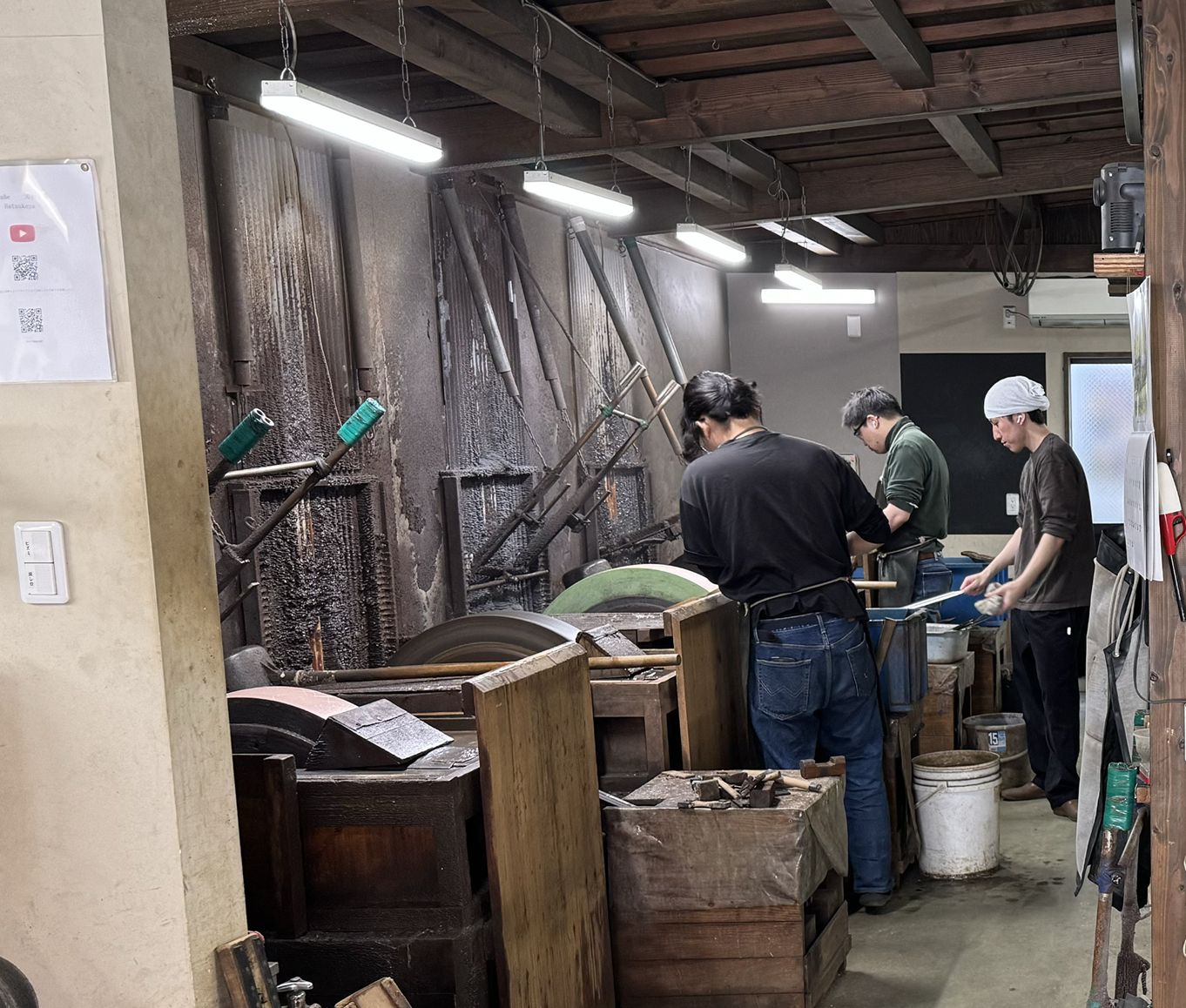
Founded in 1888 in Sakai, Osaka, Yamawaki Hamono has preserved traditional blade-making for over 130 years. The workshop remains family-run and honors the heritage of Sakai craftsmanship by dividing each stage of production among specialists.
This method ensures deep mastery and focus at every step. Their handmade kitchen knives are created in small batches, forged with skill, balance tested for performance, and sharpened for chefs and home users who expect more than just a cutting tool.
PHILOSOPHY AND PROCESS
Division of Mastery
At Yamawaki Hamono, each stage of knife-making is handled by a dedicated specialist. Forging, sharpening, and finishing are all performed by masters of their craft, working in sequence to ensure precision and consistency.
This traditional division of labor, rooted in Sakai’s blacksmithing heritage, allows every blade to be made with deep focus, tailored skill, and a clear purpose.
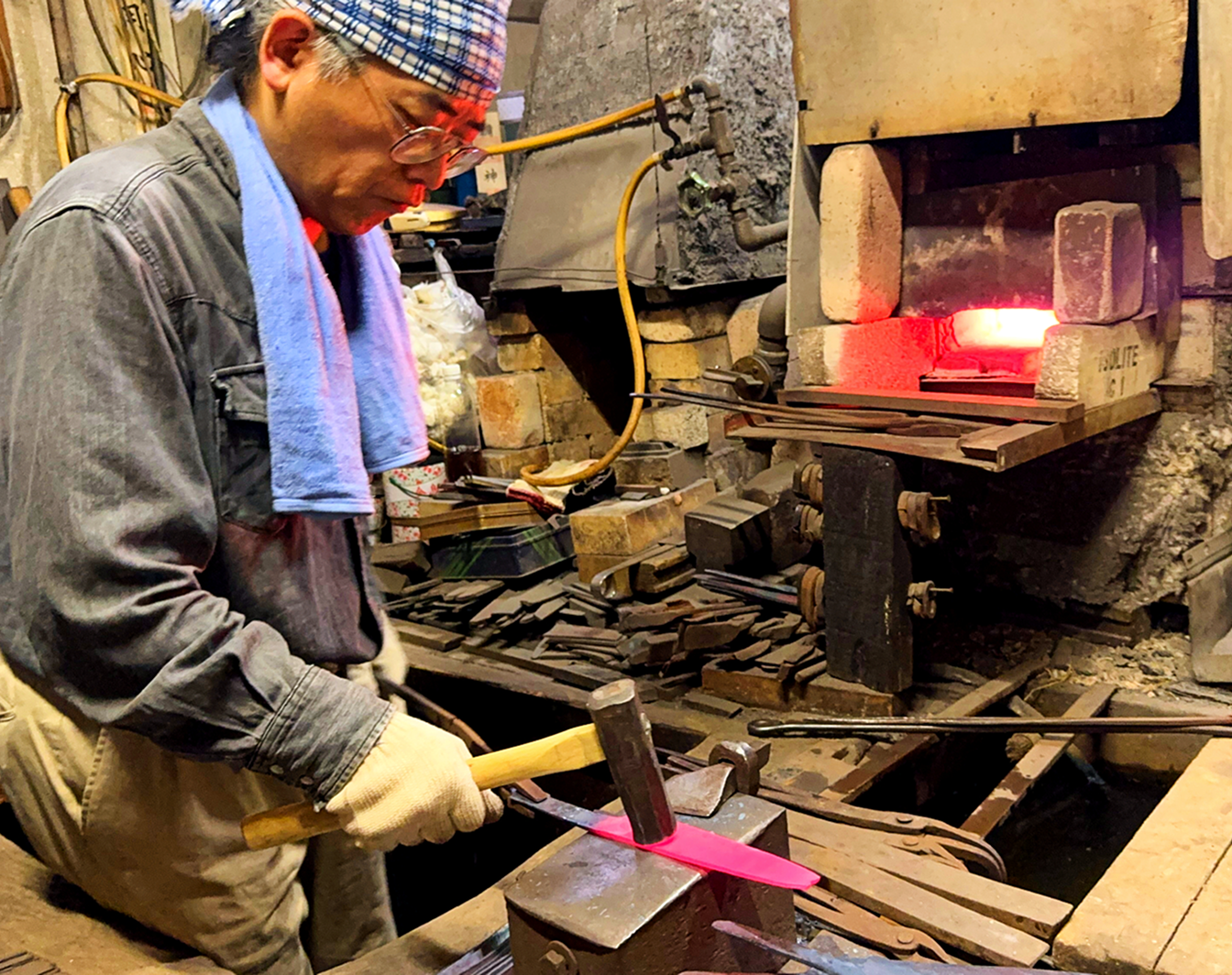
From Flame to Form
Forge temperatures are carefully controlled to stay below 850°C to protect the steel’s edge. Forging tasks include rough striking, careful flattening, and quenching.
This process forms the foundation of each blade. Warmed and cooled with tradition and precision, every blade is shaped with intent and attention to detail.
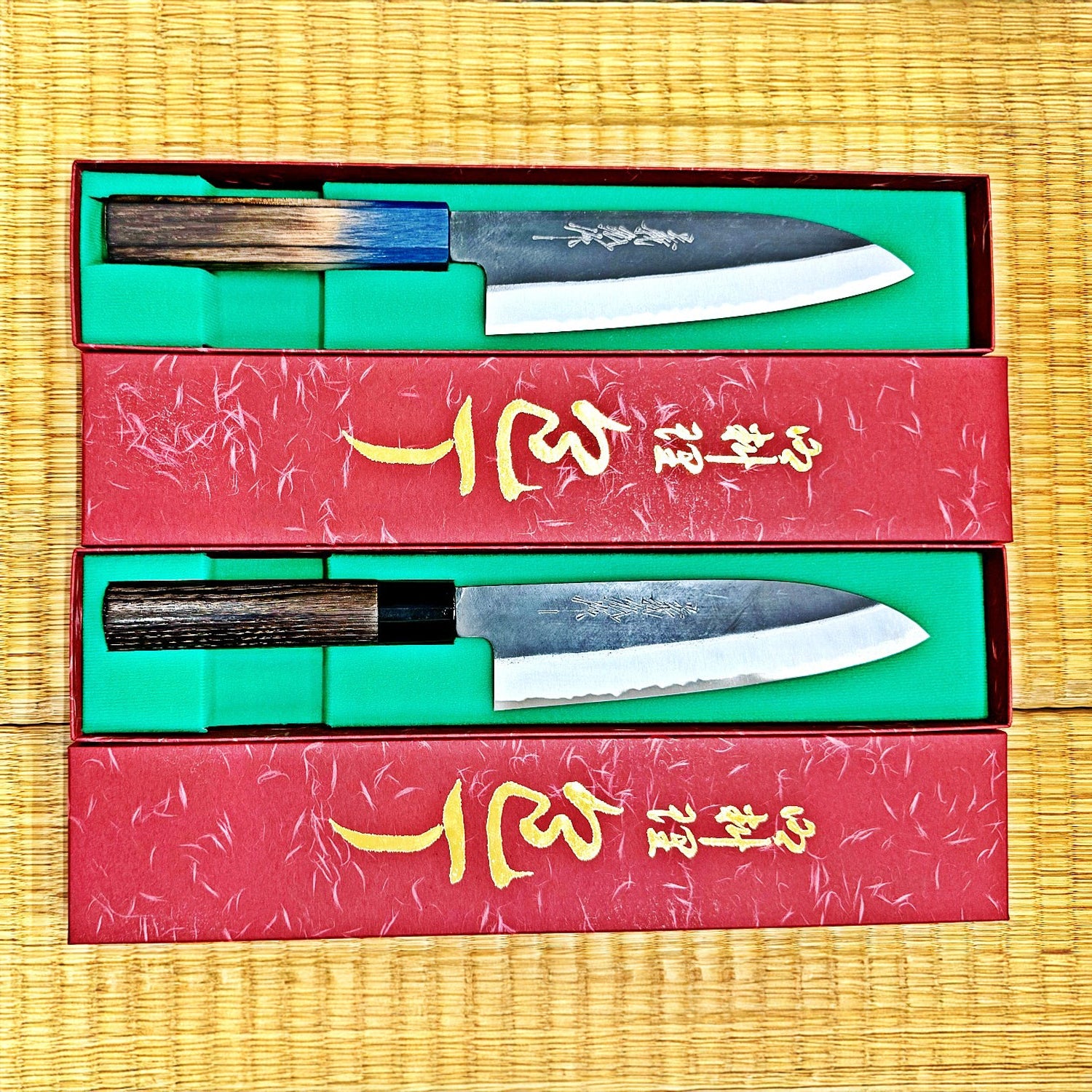
A Lifetime of Work in Every Knife
After forging, blades receive close inspection for warps and uneven surfaces. Skilled sharpeners polish and hone each edge by hand. The engraver uses custom templates to carve kanji characters that provide identity and symbolize lineage.
Handles are then selected and fitted for comfortable grip and weight. Yamawaki knives emerge from the workshop polished, balanced, and ready for generations of use.
MESSAGE FROM THE MAKERS

“Here in Sakai we divide the work among three parties, each person becomes a master of their craft. When I finish forging a blade and pass it to the sharpener, I feel real pride.
No two knives are the same. Just like cooking, where every ingredient matters, each knife reflects the hands that made it. We believe every blade has a soul.”
— Yoshinobu Yamawaki, 4th-generation president

FREQUENTLY ASKED QUESTIONS
Are Yamawaki Hamono knives dishwasher safe?
No, Yamawaki Hamono knives should not be washed in the dishwasher due to their artisanal crafting process. To prevent damage to your knife and ensure it lasts you for years to come, please wash the knife by hand with a mild detergent and gentle sponge.
How should I care for my Yamawaki Hamono knife?
After each use, be sure to wash the knife by hand using a mild detergent and gentle sponge. Rinse clean and wipe with a soft dish towel until completely dry. Store in a dry place.
Will my Yamawaki Hamono knife rust?
Yamawaki Hamono knives are made of
Aogami No.2, a type of carbon steel. Thus, they are prone to rust, so be sure to dry your knife completely before putting it away and to store in a dry place to prevent corrosion.
How much will shipping cost?
All prices include FREE international shipping. Please allow up to 5 weeks for shipping, depending on your country of residence. Please see our Shipping Policy for details.
Please note: Our products ship directly from Japan to you. You may be required to pay customs duties and/or customs clearance fees upon delivery (if applicable in your country). US customers please see our Important Notice for US Customers.
How do I sharpen my Yamawaki Hamono Knife?
Please watch the below video.
When you take proper care of your knife, it will last for decades. Apart from washing it with clean hot water, drying it off thoroughly, and placing it in newspaper to prevent rust, you need to sharpen your knife properly using a sharpening stone. And we explain you how here: