


Nakamura Blacksmith Kurouchi Santoku 180mm
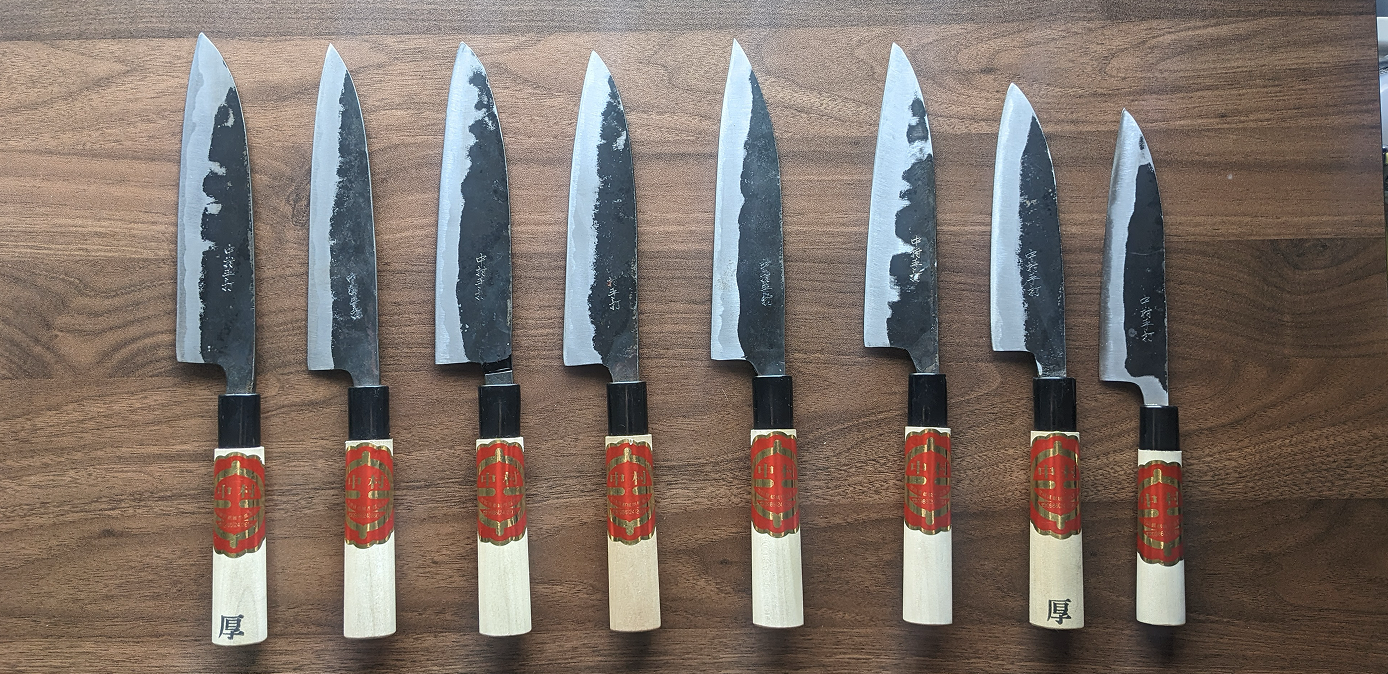
The Nakamura Blacksmith Kurouchi Santoku 180mm is a hand-forged Japanese kitchen knife crafted by Toshio Nakamura, a master blacksmith who has been crafting traditional Japanese knives for close to 70 years. This handcrafted double-bevel knife is crafted from Shirogami (White) No. 2 Steel, a very traditional steel prized by blacksmiths and knife enthusiasts alike for its great edge retention and legendary sharpness.
The knife has a light poplar wooden handle, and the blade is engraved with the signature of the smithy.
About the Blade Shape: The santoku is a multi-purpose knife, and this 180mm blade is handy for cutting everything from meat to fish to veggies. You can choose from a normal or thick blade. Thicker blades are more durable and suited for heavy-duty tasks, while thinner blades are better for precision cutting and slicing due to their ease of maneuverability.
| Blade Shape | Santoku | Handle Length | 130mm |
| Blade Material | Shirogami No2 | Handle Material |
Poplar Wood |
| Blade HRC | 60-62 | Handle Shape | Oval |
| Blade Finish | Kurouchi | Total Length | 320-330mm |
| Blade Length | 180mm | Weight |
100g (normal) 135g (thick) |
| Spine Thickness at Heel | 2,2mm (normal) 2.7 (thick) |
Usage | Multipurpose |
| Edge | Double-edge (50/50) | Origin |
Miyazaki, Japan |
| Handedness | Right hand, Left hand |
- Amakusa Red Sharpening Stone (natural stone)
- Grit: #500-#800
- Size: 150 x 45 x 30mm*
- Weight: 525 gr*
*This is a natural stone that comes directly from a quarry, so the size and weight of each stone may slightly vary.
HOW TO USE?
- Only cut food you can bite and chew with this knife since hard foods can chip the blade. Do not cut olive pits, bones, lobster shells, wood pieces or frozen food, which are especially bad due to the cold making hard steel more brittle.
- Do not use the knife in twisting motions.
- Use wood or plastic cutting boards to avoid dull knives. Do not use glass, granite or bamboo surfaces.
HOW TO CLEAN?
- After each use, hand wash the knife with mild detergent and a soft sponge, rinse with hot water and dry by hand immediately. Do not use the dishwasher.
- Wood handles may dry out over time and exposure to water. To prevent this, use some food safe mineral oil or beeswax.
HOW TO SHARPEN?
- Use the FREE WHETSONE included with the knife for sharpening. It is recommended by Nakamura Blacksmith.
- Remember to sharpen both sides evenly as this is a double-bevel knife.
HOW TO STORE?
- Wrap the blade in newspaper to reduce direct exposure to the air and prevent rusting if you keep knives in a drawer or travel case.
- If you are hanging the knife or using a knife stand, remember that the blade should point downwards.
- If you are storing them in a drawer, keep the edge from touching anything else.
We offer FREE SHIPPING for all orders. We also ship worldwide from our warehouse in Japan.
After your order is confirmed, it may take up to 3-5 business days for dispatch from our warehouse.
You'll receive:
- An order confirmation email when we check payment.
- A shipping confirmation email with a tracking number once your order has shipped.
Import duties, VAT, or local customs taxes may apply once your order reaches your country.
These are set by your local customs authority and are not included in our product prices or free shipping. We suggest contacting the responsible institutions to find more information.
These fees are the customer's responsibility and thus must be paid upon delivery.
FOR U.S. CUSTOMERS: Beginning August 26, 2025, customers have reported anywhere from 20% to 80% import taxes due to changes in tariffs regulations.

AS FEATURED ON YOUTUBE
Watch Daisuke Nishida hand-forge layered steel into knives that combine beauty, precision, and strength.
About the Craftsman
Toshio Nakamura doesn’t forge for volume. He crafts to meet real-world needs. Each knife begins with a request, often from long-time customers who know exactly what they want. A specific weight, a particular edge angle, a blade that resists dulling during spinach harvest, these are the starting points. No two knives are quite the same. He listens, adjusts, and builds one by one. Where others use industrial presses, Nakamura still works by hand, fine-tuning thicknesses and edge profiles based on how each tool will be used. The result is a knife that’s not only sharp, but purposeful.
PHILOSOPHY AND PROCESS
Crafted by Need, Not by Numbers
Every blade that leaves Nakamura’s forge exists for a reason. Whether it’s a small sickle used in the mountain fields of Kumamoto or a handcrafted kitchen knife ordered by a returning customer, each tool is made with a clear purpose.
Toshio doesn’t chase volume. Instead, he draws on decades of intuition and field knowledge, often adjusting the shape or grind based on how and where a blade will be used. If a local farmer needs a tool to cut thick grass near a stream, or a hunter requests a blade that won’t slip when wet, he’ll forge it to match that reality, not a template.
This philosophy has earned him a loyal following across the region. His customers trust that what they receive isn’t just sharp, it’s suited to their lives.
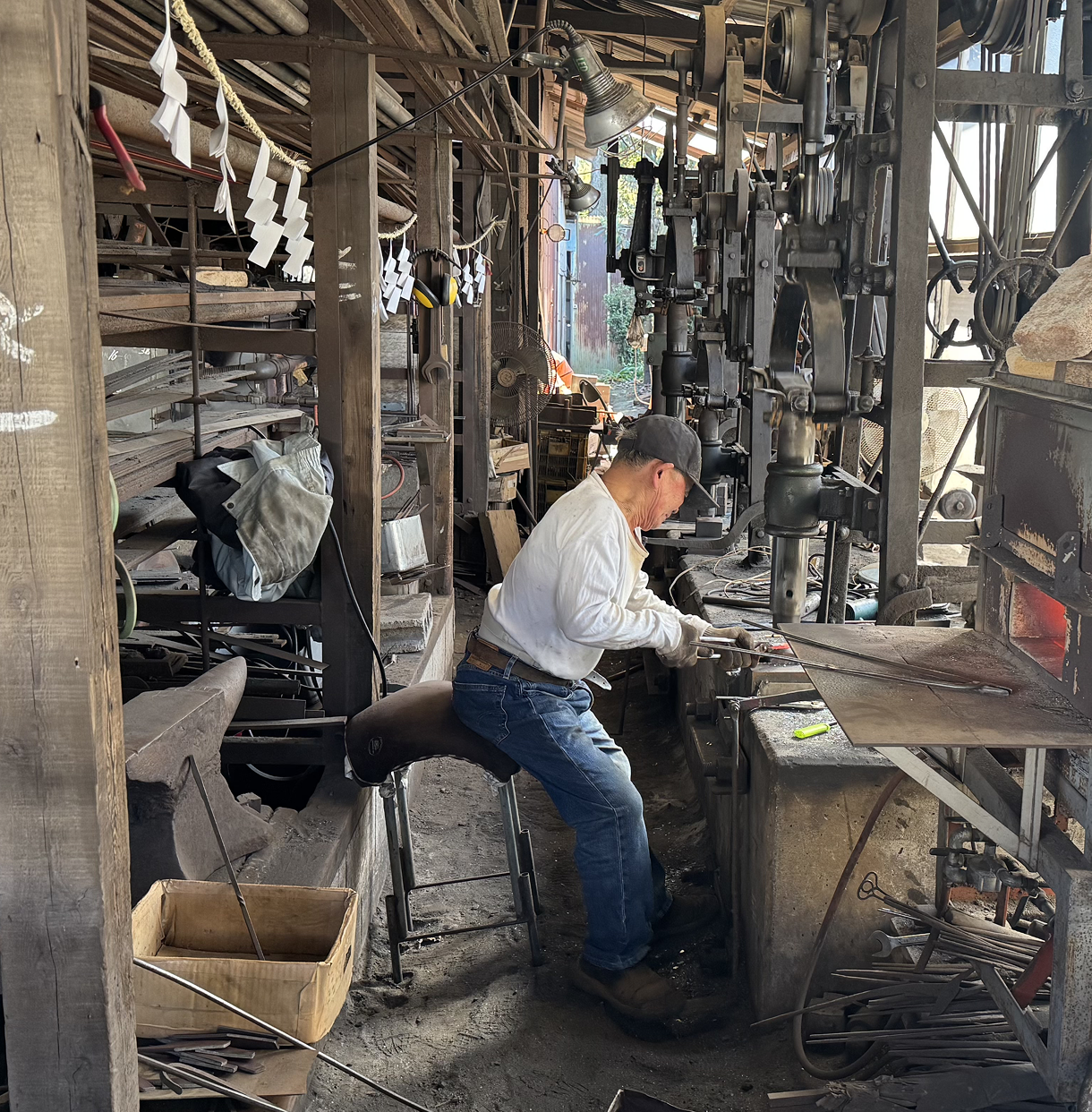
Hammer, Heat, and Human Judgment
Forging at Nakamura Blacksmith is a delicate balance of temperature and timing. The steel is heated to around 850°C, never beyond 880°C, to preserve edge integrity. Depending on the material, tempering is done under 800°C.
Toshio explains that even a few degrees too much can ruin the steel. With both large and small hammers, he shapes the metal quickly and precisely, using muscle memory and instinct rather than machines. The process includes two hardening cycles to reduce warping and increase edge strength. Every blade is adjusted and refined mid-process, no batch is identical.
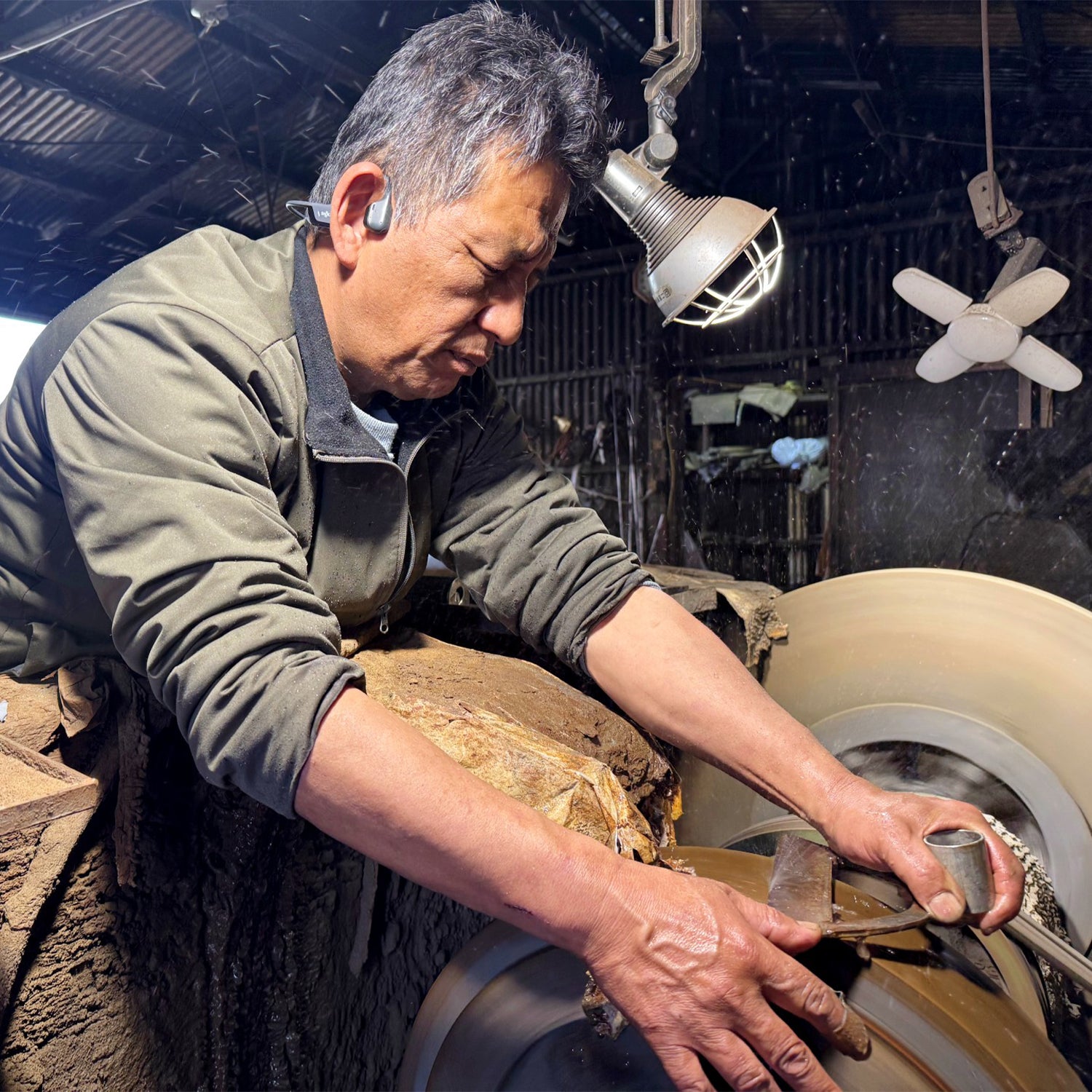
A Lifetime of Work in Every Knife
Finishing a Nakamura blade isn’t just about looks, it’s about readiness. After sandblasting to reveal the steel line and visual clarity, each blade is sharpened by hand. The process includes water grinding, edge honing, and test cuts (often on newspaper) to verify balance and sharpness. Slight bends are straightened by eye and touch.
Once the handle is fitted, the blade is ready for use but the commitment doesn’t end there. Customers are encouraged to return for re-sharpening and maintenance. As Toshio says, it’s not about chasing trends, but about making tools that stay useful for life.
MESSAGE FROM THE MAKERS
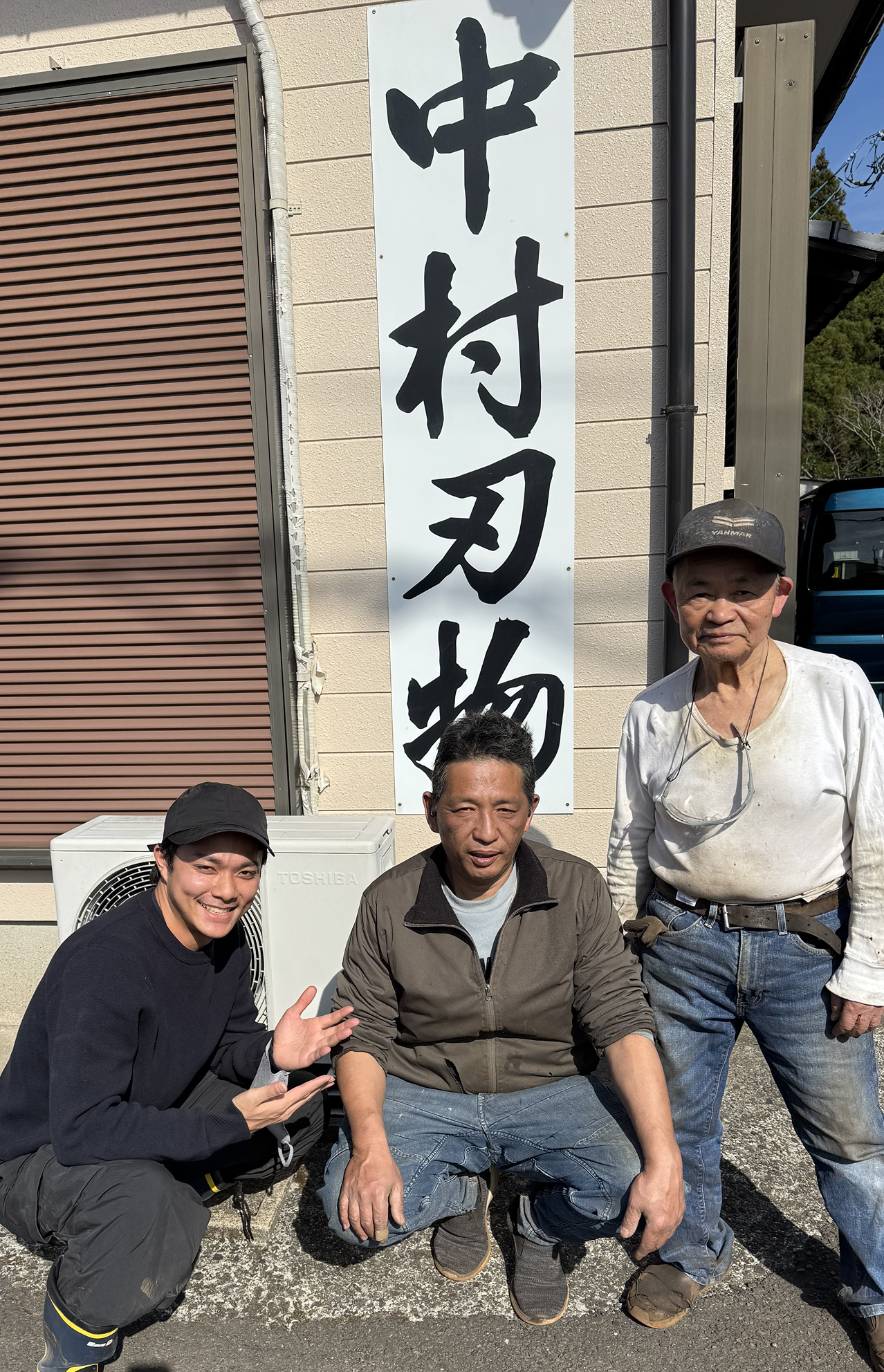
I’ve been making knives for nearly 70 years. Some things have changed, but what matters hasn’t. I still craft each blade by hand, one at a time, just like I always have. Customers don’t come to me for mass production, they come with ideas, with needs, and I make something that fits.
Every knife I make reflects decades of trial and error. Some days I discover something new, even now. That’s the beauty of this work: you never stop learning, and you never stop improving.
Frequently Asked Questions
Are Nakamura Blacksmith knives dishwasher safe?
No, Nakamura Blacksmith knives should not be washed in the dishwasher. To prevent damage to your knife and ensure it lasts you for years to come, please wash the knife by hand with a mild detergent and gentle sponge.
How should I care for my knife?
After each use, be sure to wash the knife by hand using a mild detergent and gentle sponge. Rinse clean and wipe with a soft dish towel until completely dry. Store in a dry place.
Will my Nakamura Blacksmith knife rust?
Nakamura Blacksmith knives are made of Shirogami No.2 (White Steel #2), a type of carbon steel. Thus, they are prone to rust, so be sure to dry your knife completely before putting it away and to store in a dry place to prevent corrosion.
How much will shipping cost?
All prices include FREE international shipping. Please allow up to 5 weeks for shipping, depending on your country of residence. Please see our Shipping Policy for details.
Please note: Our products ship directly from Japan to you. You may be required to pay customs duties and/or customs clearance fees upon delivery (if applicable in your country). US customers please see our Important Notice for US Customers.
How do I sharpen my Nakamura Blacksmith knife?
Please watch the video below.
Caring for your Nakamura Blacksmith knife will make it last for decades. We recommend sharpening the blade following the instructions in the video below using your whetstone included FREE with your purchase.