


Inoguchi Hamono Western Santoku Knife 21cm
The Inoguchi Hamono Western Santoku Knife 210mm is handcrafted from Ginsan No. 3 stainless steel at Inoguchi Hamono, a smithy which operates out of the renowned knife-making city of Seki, and features a beautiful Japanese oak handle with optional traditional urushi lacquer finishes in brown, blue or black.
Its stainless steel blade is both rust-resistant and contains enough carbon to offer an exceptionally sharp, long-lasting edge which is easy to sharpen. Unlike many Japanese knives made with the traditional warikomi lamination method, this Inoguchi Hamono knife is crafted with a mono-steel blade, providing superior sharpness, consistent edge retention, and a clean, direct cutting feel.
About the Blade Shape: A well-balanced, all-purpose kitchen knife, santoku knives are designed for versatility across meat, fish, and vegetables. The moderately flat edge supports efficient chopping and slicing, while the compact blade length offers excellent control for everyday prep. Typically double-edged and measuring between 165mm and 180mm, the santoku is a reliable choice for both home cooks and professional kitchens.
| Blade Shape | Santoku | Handle Length | 115mm |
| Blade Material | Ginsan No.3 Stainless Steel | Handle Material |
Laminated Wood |
| Blade HRC | 60-61 | Handle Shape |
Western-style |
| Blade Finish | Polished | Total Length | 320mm |
| Blade Length | 210mm | Weight | 195g |
| Spine Thickness at Heel | 2.2mm | Usage |
Multi-purpose |
| Edge | Double-edge (50/50) | Origin |
Seki, Japan |
| Handedness | Right hand, Left hand |
HOW TO USE?
- Only cut food you can bite and chew with this knife since hard foods can chip the blade. Do not cut olive pits, bones, lobster shells, wood pieces or frozen food, which are especially bad due to the cold making hard steel more brittle.
- Do not use the knife in twisting motions.
- Use wood or plastic cutting boards to avoid dull knives. Do not use glass, granite or bamboo surfaces.
HOW TO CLEAN?
- After each use, hand wash the knife with mild detergent and a soft sponge, rinse with hot water and dry by hand immediately. Do not use the dishwasher.
- Wood handles may dry out over time and exposure to water. To prevent this, use some food safe mineral oil or beeswax.
HOW TO STORE?
- Wrap the blade in newspaper to reduce direct exposure to the air and prevent rusting if you keep knives in a drawer or travel case.
- If you are hanging the knife or using a knife stand, remember that the blade should point downwards.
- If you are storing them in a drawer, keep the edge from touching anything else.
IMPORTANT SAFETY INFORMATION
Keep out of reach of children at all times. Do not use if the blade is chipped or the handle is cracked or loose. Hand wash only — do not place in dishwasher.
We offer FREE SHIPPING for all orders. We also ship worldwide from our warehouse in Japan.
After your order is confirmed, it may take up to 3-5 business days for dispatch from our warehouse.
You'll receive:
- An order confirmation email when we check payment.
- A shipping confirmation email with a tracking number once your order has shipped.
Import duties, VAT, or local customs taxes may apply once your order reaches your country.
These are set by your local customs authority and are not included in our product prices or free shipping. We suggest contacting the responsible institutions to find more information.
These fees are the customer's responsibility and thus must be paid upon delivery.
FOR U.S. CUSTOMERS: Beginning August 26, 2025, customers have reported anywhere from 20% to 80% import taxes due to changes in tariffs regulations.
FOR EU CUSTOMERS: Please note that we do not participate in the EU IOSS scheme, so you will be responsible for any VAT due upon delivery.

AS FEATURED ON YOUTUBE
Visit the Inoguchi Hamono workshop in Seki, Gifu. You’ll see full-steel blades ground in-house, start to finish, to control geometry, bite, and durability.
About the Craftsmen
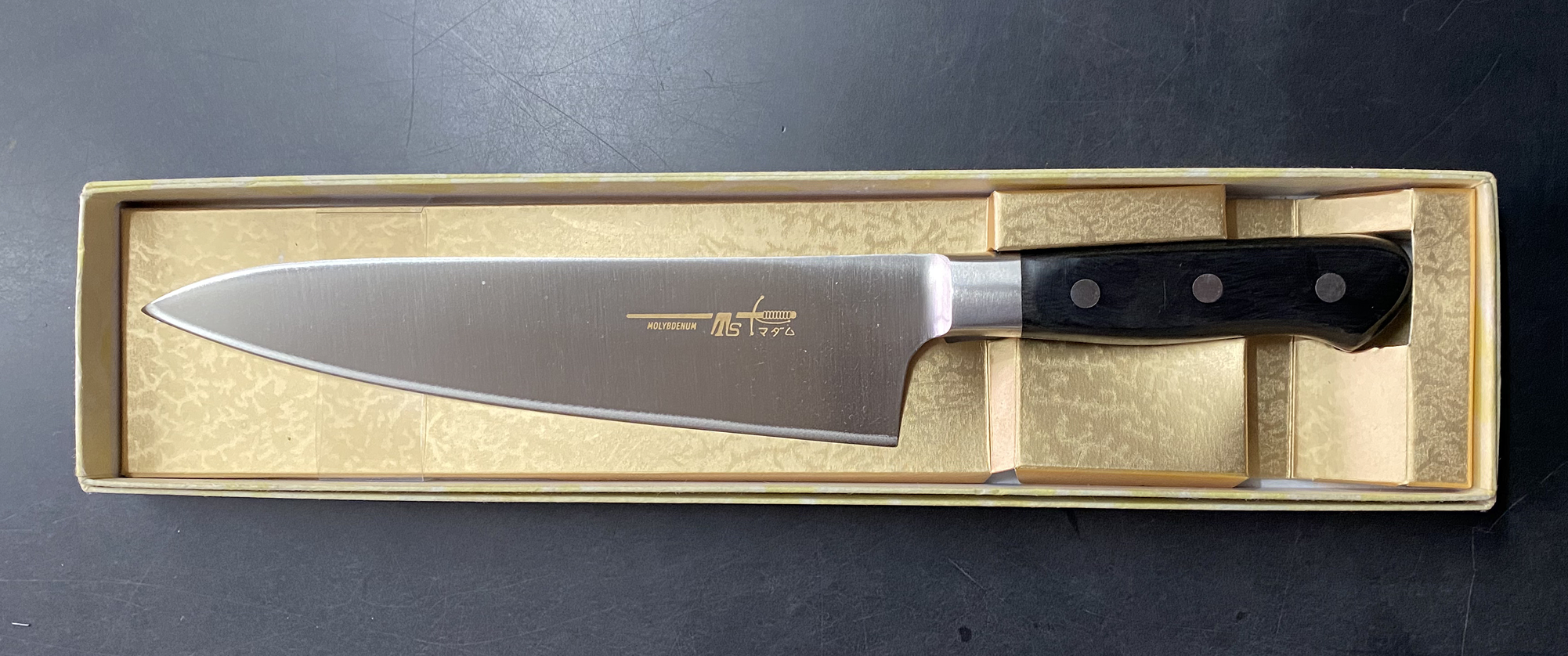
Cooking with Joy. Crafted in Seki.
Seki is a knife town with more than seven centuries behind it. In 1960, Inoguchi Hamono Seisakusho set up there and has stayed in the same tradition across four generations.
The workshop’s aim is disarmingly simple: let people feel the joy of cooking through a knife that works. Machines handle repetition. The judgement that defines a blade, how thin, how even, how it meets the board, stays with the makers. That is why the final edge is always set inside the factory.
The Craft Behind a Blade: From Fencing Strips to Kitchen Cuts
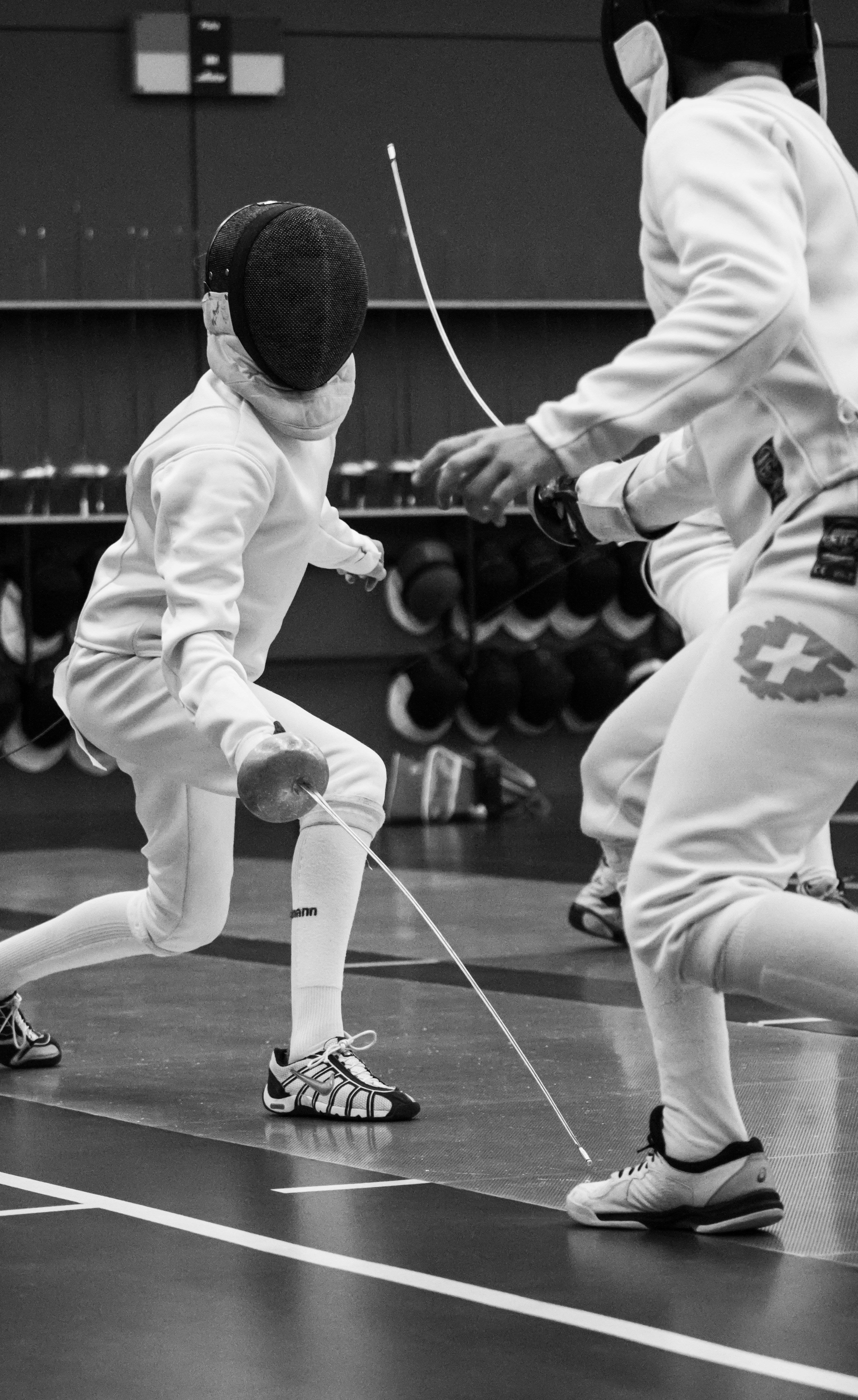
Olympic steel, kitchen table
Inoguchi Hamono once held a rare place in Japan’s cutlery industry, crafting fencing swords used by Olympic athletes. At the time, only two or three manufacturers in the entire country had the skill and machinery to do it. Working under commission from Tokyo Sports Trading, Inoguchi Hamono even built custom equipment to meet the exacting demands of the sport.
At first glance, an elegant fencing blade and a kitchen knife couldn’t be more different. Yet both are born from the same pursuit: drawing out the steel’s true potential.
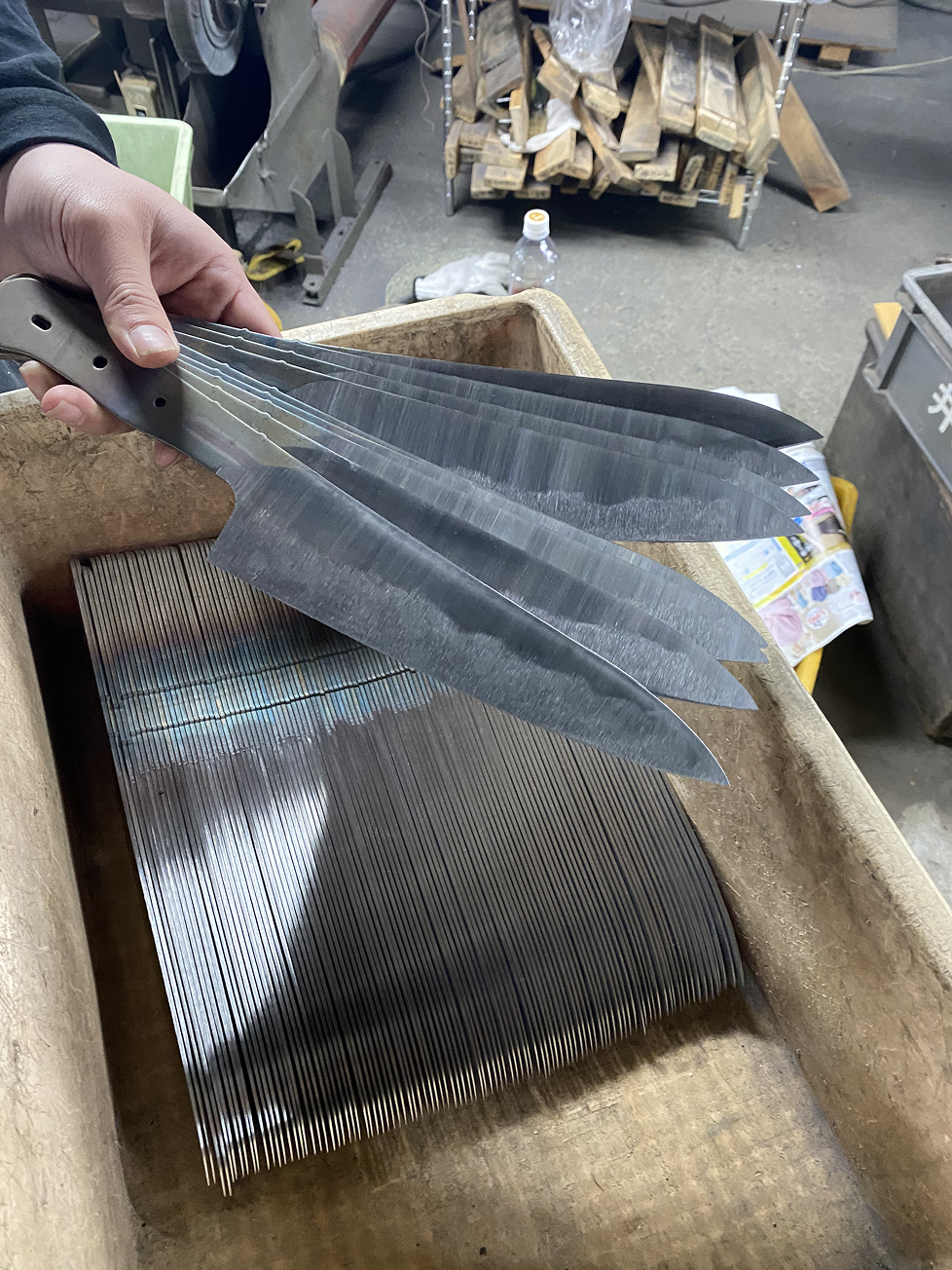
What we Kept from Swordcraft
Through years of swordsmithing and crafting fencing blades, Inoguchi Hamono has honed a deep understanding of how to handle delicate edges.
That same expertise drives their unwavering commitment to in-house sharpening today. Every blade is finished within their own workshop, a continuation of the craftsmanship that once shaped steel for both competition and tradition.
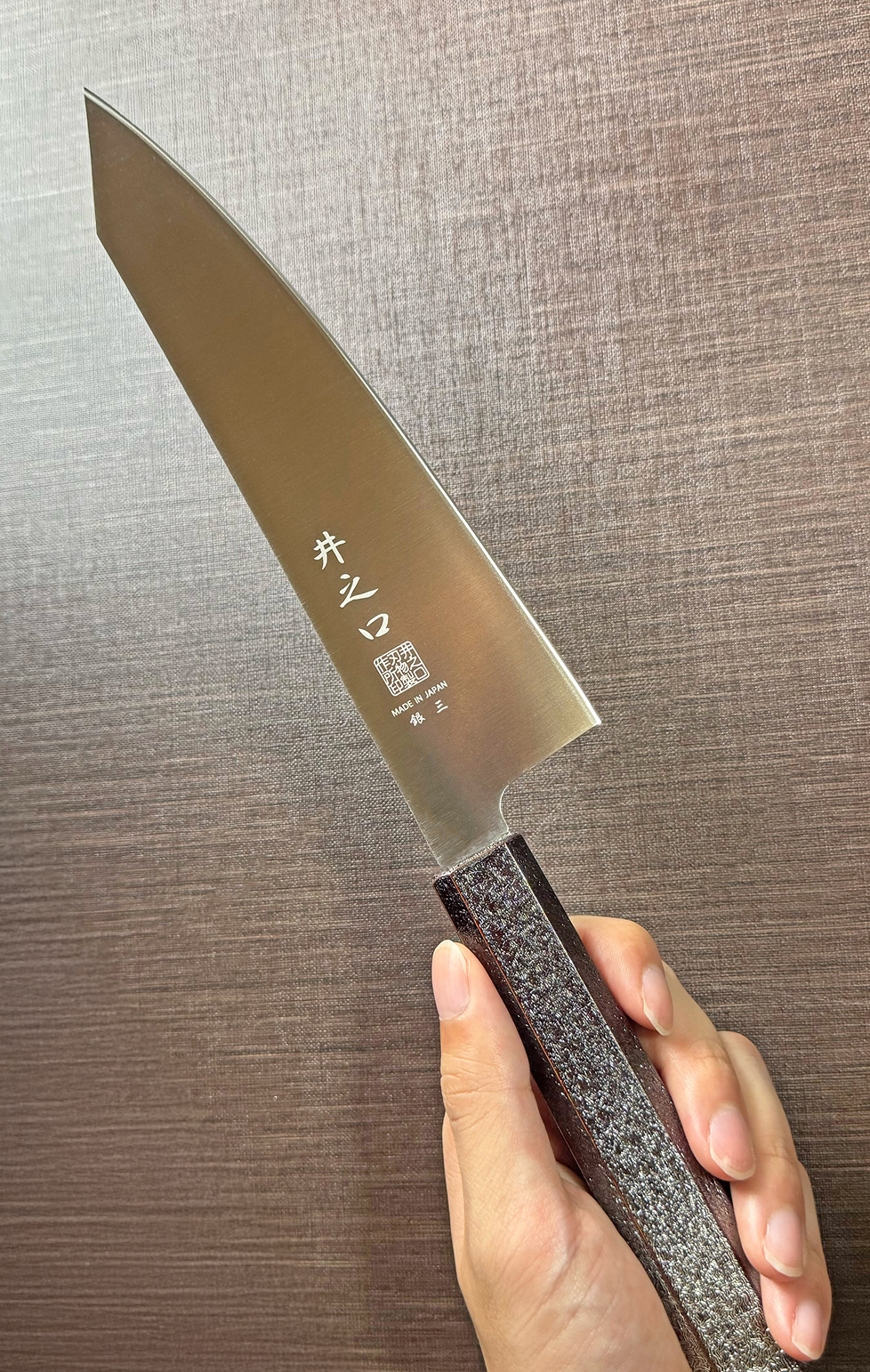
The Heat That Shapes Resilience
A fencing sword demands an essential quality—resilience. It must bend deeply without breaking, enduring every strike and return. To achieve this strength, Inoguchi Hamono developed a unique heat-treatment process that repeats cycles of quenching and tempering to draw out the steel’s toughness.
That same mastery of heat now defines their knife-making, producing blades that resist chipping, sharpen smoothly, and hold their edge with enduring strength.
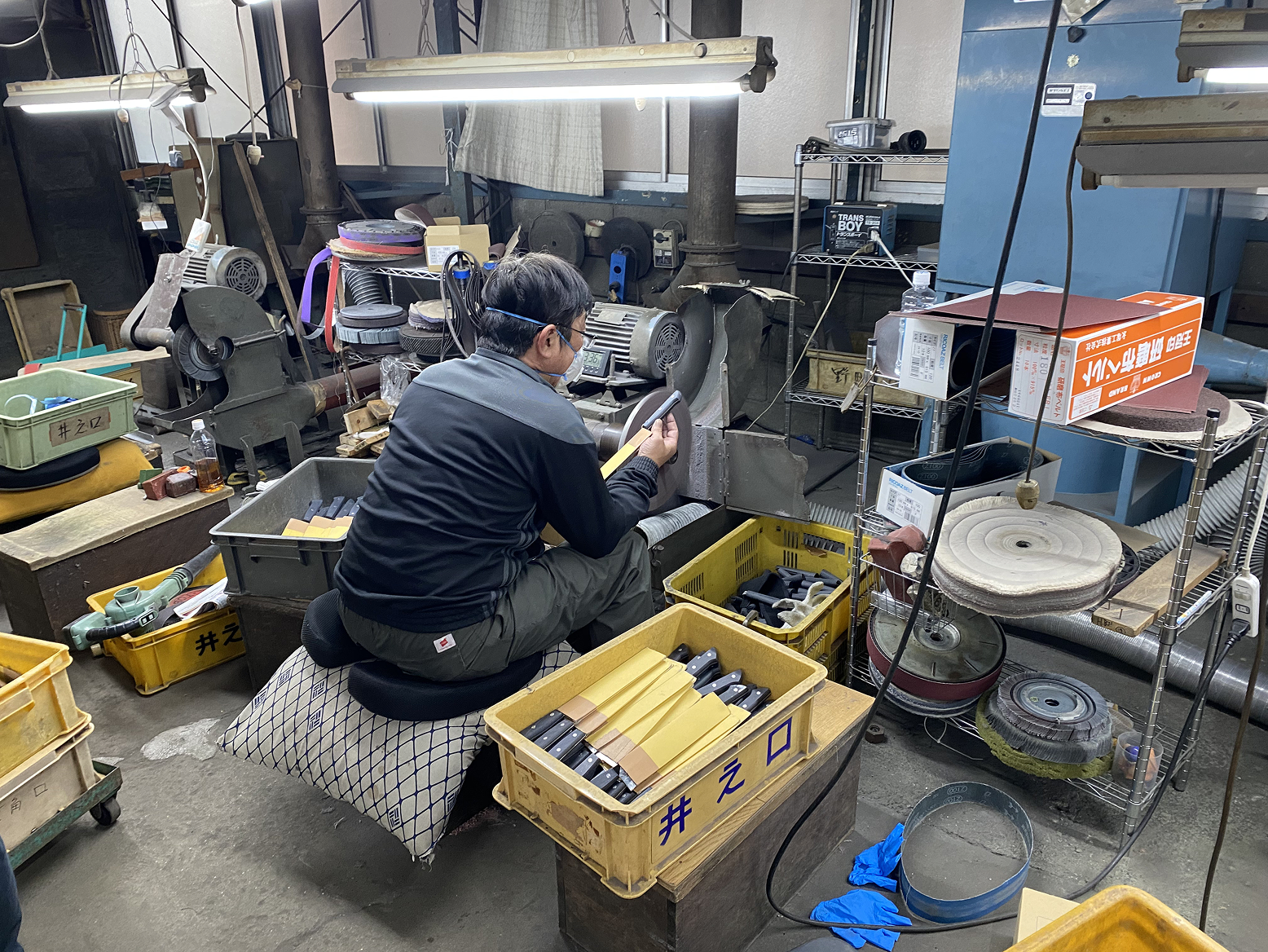
The Enduring Art of In-House Sharpening
Sharpening is often said to be the most decisive stage in knife-making, the moment that determines how a blade will truly perform. While many manufacturers now outsource this process to reduce costs and increase efficiency, Inoguchi Hamono has kept it entirely in-house since its founding.
Across four generations, their craftsmen have refined the skill and intuition required to bring each edge to life. Every knife is shaped, polished, and inspected under one roof, ensuring not only consistent quality but also the soul of craftsmanship that endures in every cut.
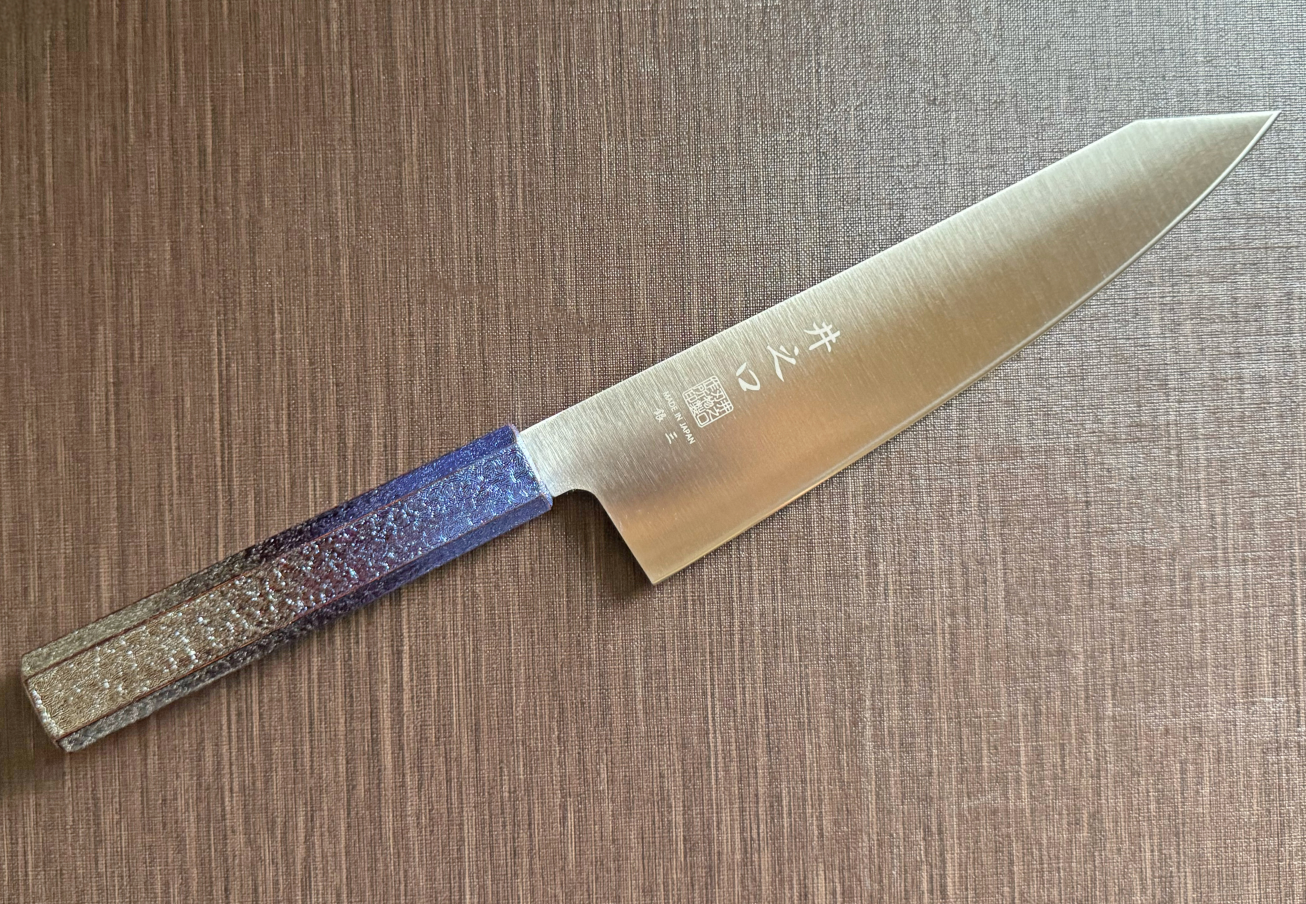
Ginsan No.3: Stainless with a Bite
The house steel is Ginsan No. 3. It is stainless, yet high enough in carbon to take a crisp, clean apex and hold it. On the stone it feels precise.
In the kitchen it gives you sharpness with the everyday ease of stainless care. Pros appreciate the stability. Home cooks appreciate the low maintenance.
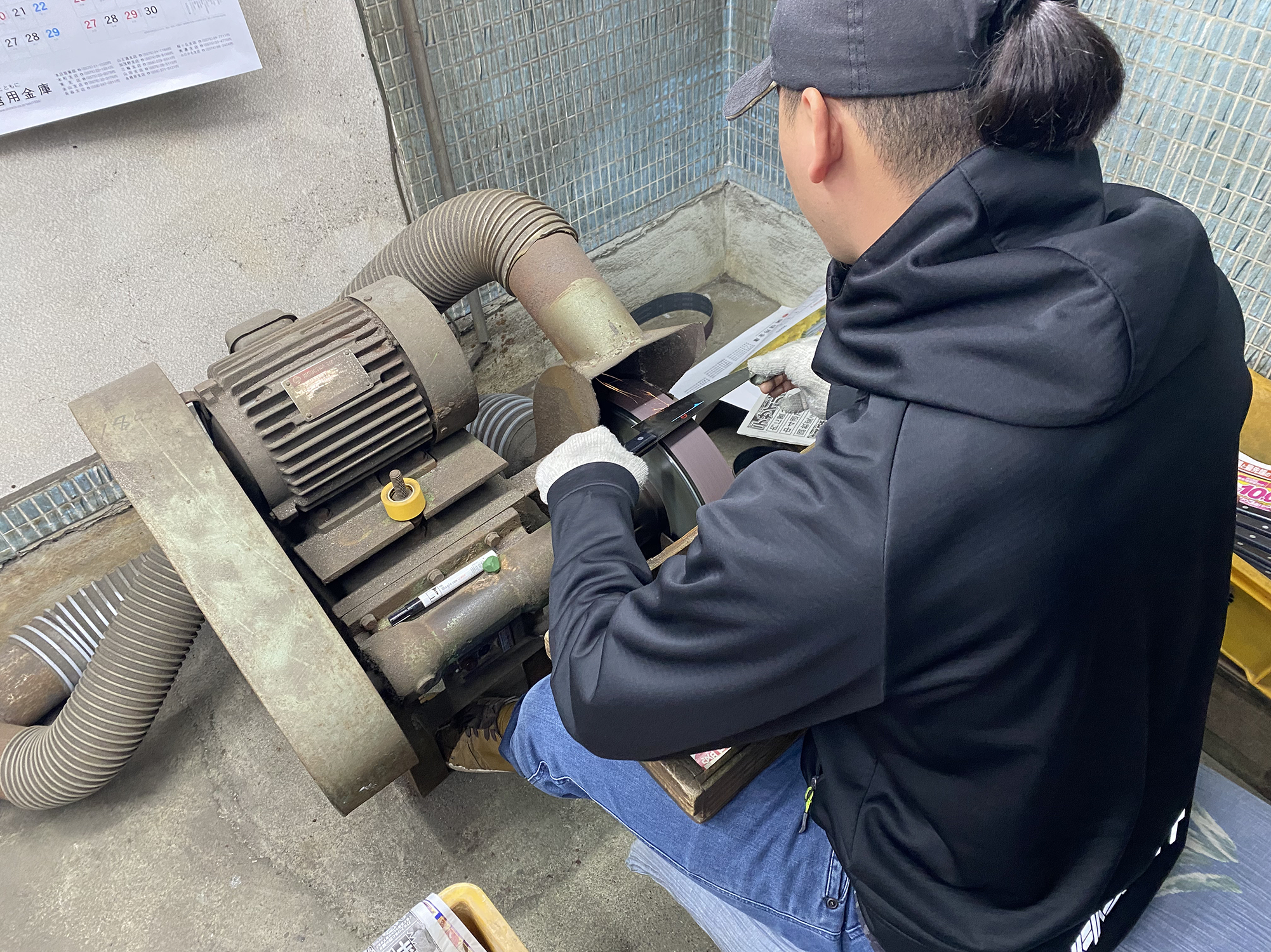
Why Inoguchi chooses Monosteel
At present, many knives on the market are “warikomi” knives made by laminating different steels. Inoguchi Hamono, however, has adhered to “monosteel knives” as a house tradition since its founding. There are clear reasons for this choice.
Sharpness and Edge Retention
Because the same steel runs in a single piece right to the edge, the blade bites into ingredients extremely well. It is also easier to raise a very fine edge than on laminated knives, and once sharpened the edge lasts longer.
Ease of Sharpening and Recovery
Because the whole blade is a uniform material, resistance on the stone is consistent and the feel of the edge is transmitted directly to the hand. Even if the edge chips, it is easy to correct by regrinding the entire blade, and repeated sharpening lets you use it for a long time.
Direct Feel of the Edge
With a monosteel knife, the sensation of the edge entering the cut is conveyed straight to the hand at the moment of cutting. This “feel of the steel” heightens the pleasure of handling a knife and is especially appreciated by professionals and enthusiasts who pursue their craft.
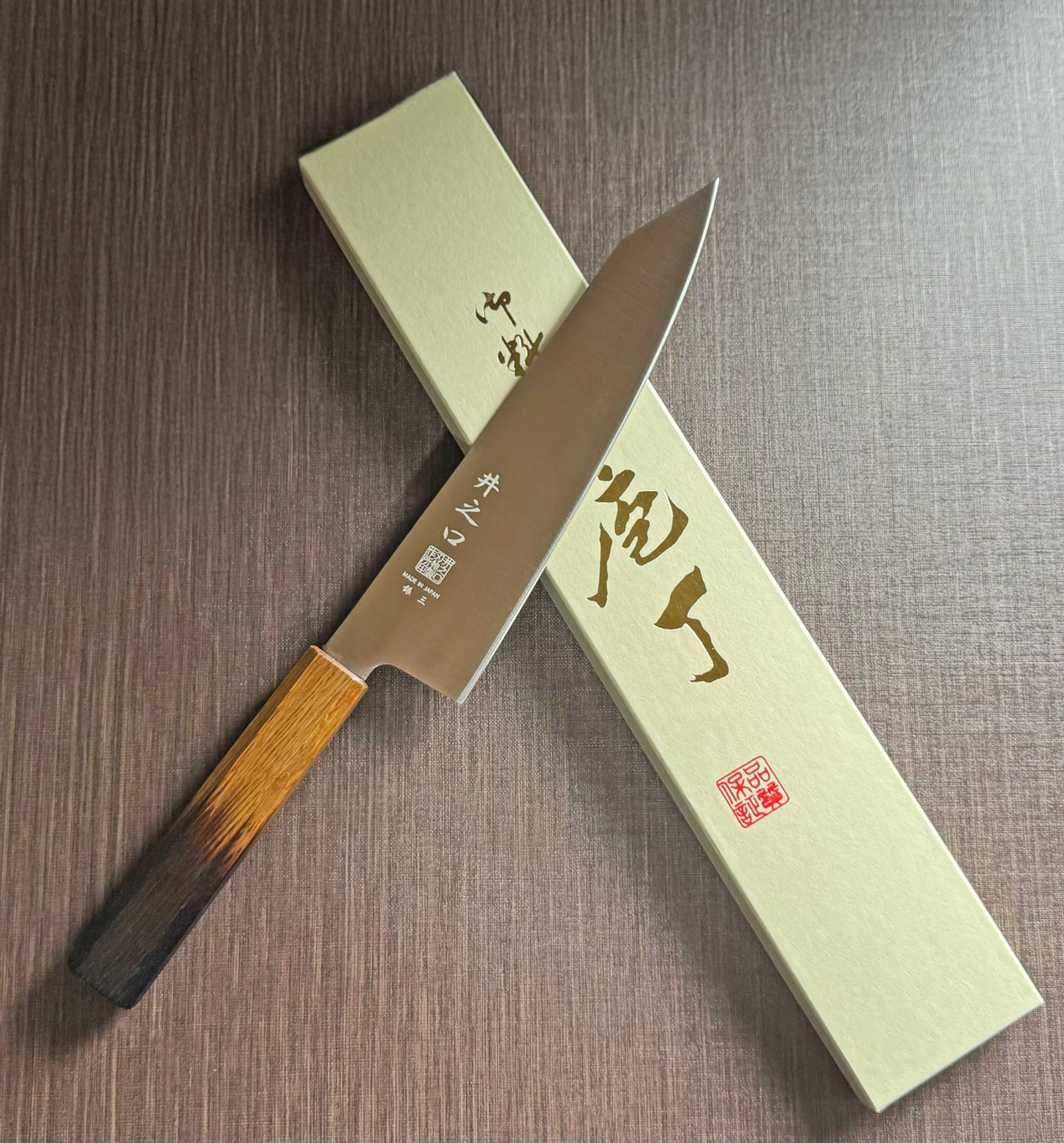
More Than a Tool, A True Partner in Cooking
An Inoguchi monosteel knife is not just a mere tool. It settles into the user’s hand and becomes a partner that brings out the joys of cooking to the fullest.
Message From the Makers
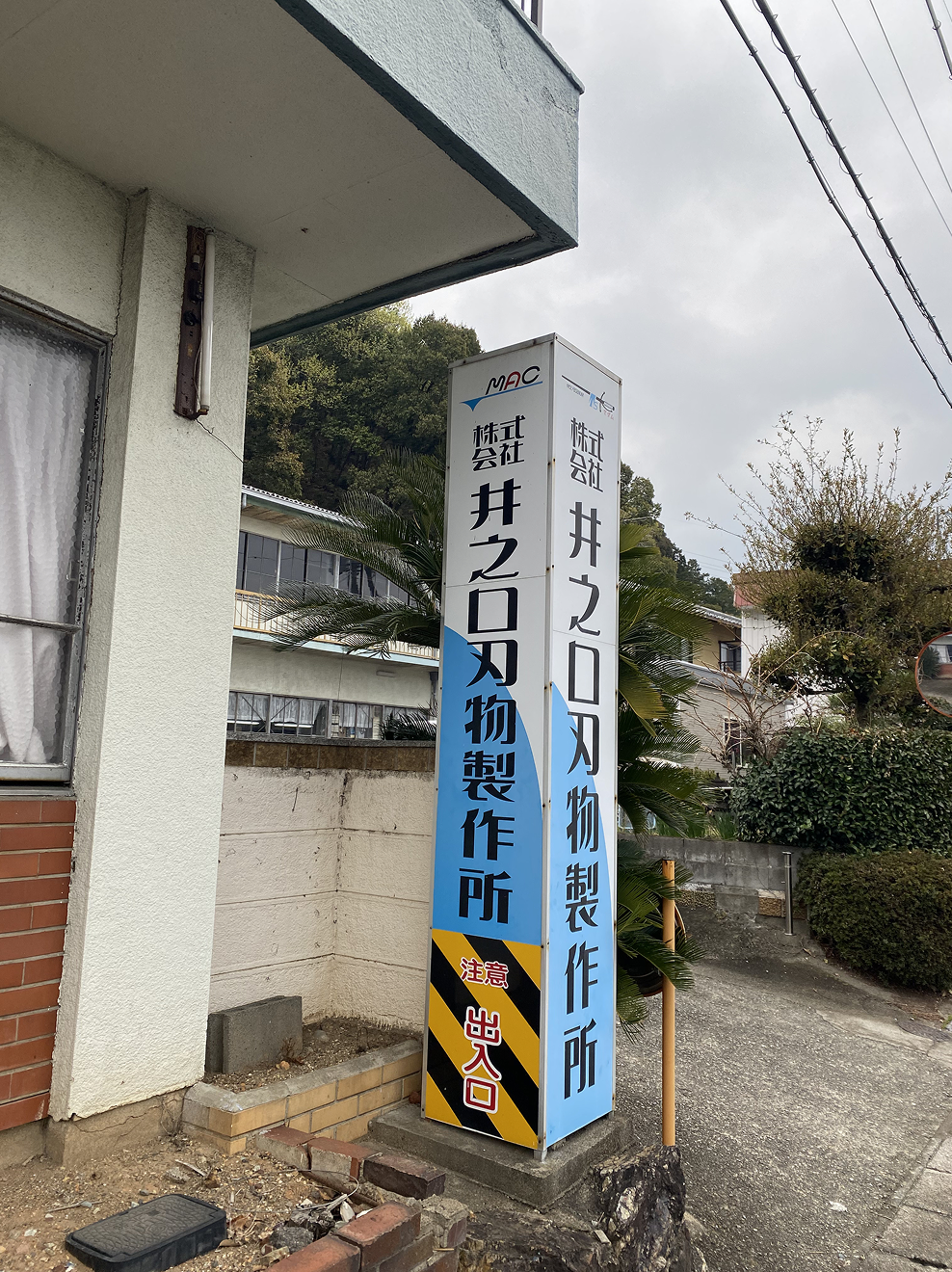
Since our founding in 1948, Inoguchi Hamono Seisakusho has pursued sharpness and durability through proprietary forging methods.
Craftspeople who have inherited traditional techniques apply exacting standards, finishing each blade one by one with care.
FREQUENTLY ASKED QUESTIONS
Are Inoguchi Hamono knives dishwasher safe?
No, Inoguchi Hamono knives should not be washed in the dishwasher due to their artisanal crafting process. To prevent damage to your knife and ensure it lasts you for years to come, please wash the knife by hand with a mild detergent and gentle sponge.
How should I care for my Inoguchi Hamono knife?
After each use, be sure to wash the knife by hand using a mild detergent and gentle sponge. Rinse clean and wipe with a soft dish towel until completely dry. Store in a dry place.
Will my Inoguchi Hamono knife rust?
Inoguchi Hamono knives are crafted using stainless steel, making them rust resistant and low maintenance when compared to carbon steel knives. However, rust can still occasionally form even on stainless steel knives, so be sure to dry your knife completely before putting it away and to store in a dry place to prevent rust from forming.
How much will shipping cost?
All prices include FREE international shipping. Please allow up to 5 weeks for shipping, depending on your country of residence. Please see our Shipping Policy for details.
Please note: Our products ship directly from Japan to you. You may be required to pay customs duties and/or customs clearance fees upon delivery (if applicable in your country). US customers please see our Important Notice for US Customers.